Showing posts with label Priesthood. Show all posts

Monday, September 18, 2017

Ordination of Women


QUESTION

What is the Orthodox stance on ordination of women to the priesthood and episcopacy, and how do you back it up?

ANSWER

While a thorough answer to your question is beyond the scope of an email, it can be said that the Orthodox Church precludes the ordination of women to the priesthood and episcopacy. It is a matter of Holy Tradition, as well as a vision of ministry as something not limited to the ordained priesthood. In my limited experience of this subject I have come across theologians who posit that, while there may be no strictly theological objection to the ordination of women, Holy Tradition has never supported it, and that theological pursuits cannot be considered in isolation from the ongoing life of God’s People known as Tradition. [It is important here to understand that Holy Tradition must not be confused with traditions (small “t”, and plural) or customs.]

I would like to share a story with you to help illustrate: Shortly after the outbreak of the Russian Revolution, the militantly atheistic communist regime passed laws separating Church and state and separating the schools from the Church. Other laws forbade the ordained clergy from evangelizing, teaching religion to anyone, especially to children, etc. Clergy were limited to carring out religious rites within the confines of church walls—which had been confiscated by the state. The goal of this anti-religious stance was to wipe out all religious expression and faith, since religion was seen as “the opium of the people” and an obstacle in the creation of pure socialism. Such would be the situation until the late 20th century. There is a story which relates how a Patriarch of Moscow, shortly after the Revolution, was asked by a Soviet leader, “What will the Church do after the last grandmother dies?” The Patriarch replied, “There will be another generation of grandmothers to take their place.” Very prophetic words, especially when one considers that most of today’s grandmothers within the former Soviet Union were mere children or not even born when these words were first spoken.

Monday, August 28, 2017

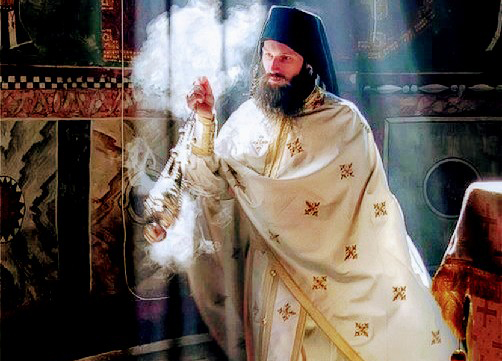
Correct Priestly Attire


In issue no. 6 of The Russian Pastor, an article by Archpriest Boris Kizenko, "Do not associate yourself with this age," was printed. There he touched upon the question of whether or not priests should wear their cassocks or riasa. I would like to share a few thoughts on this matter.

Very often in the sphere of Church laws and traditions we, for one reason or another, allow ourselves to compromise these laws. In our society today, the reasons and circumstances for such compromises can seem very justifiable. However, the danger lies in the fact that any compromise can become habitual, and the compromised behavior then becomes the norm, giving rise to further compromises and a general degradation of standards. Fr. Boris very aptly describes this progression in his article. At a time when we are perhaps at risk of completely losing the ideal in the realm of priestly attire, it is fitting to review the Church rules and directives concerning the attire of a priest, as well as look at some examples from contemporary life which shed light on this question.

1) The 27th Canon of the 6th Ecumenical Council states: "None who is counted with the clergy should dress inappropriately, when in the city, nor when travelling. Each should use the attire which was appointed for clergy members. If someone breaks this rule, may he be deprived of serving for one week."

Here everything is clear. If you do not wish to wear a priest's clothing, do not dare to stand before the altar of God.

2) The great interpreter of Church Canons, Balsamon, in his interpretation of the 14th canon of the 7th Ecumenical Council, which speaks of the ordination of readers, notes: "He who has put on black attire with the purpose of entering the clergy, cannot remove it, for he has stated his intent of serving God and therefore cannot break his promise to God and ridicule this holy image, as other ridiculers do."

If constant wearing of "black attire" is expected of the first rank of the priesthood, the reader, then all the more does it refer to those who are fully in the rank of the priesthood.

Monday, August 7, 2017

The Baptism and Priesthood of Non-Orthodox Sects by St. Nikodemos the Hagiorite


The following words of Saint Nikodemos the Hagiorite are not innovative, but rather, are a expression of the teaching of the entire Church throughout all ages and localities.

The baptism administered by heretics and schismatics is unacceptable, and they ought to be baptized when they return to the Orthodoxy of the Catholic Church*. The reasons are as follows:

1st) Because there is but one baptism, and because this is to be found only in the catholic Church. Heretics and schismatics, on the other hand, being outside of the catholic Church, have, in consequence, not even the one baptism.

2nd) The water used in baptism must first be purified and be sanctified by means of prayers of the priests, and by the grace of the Holy Spirit; afterwards it can purify and sanctify the person being baptized therein. But heretics and schismatics are neither priests, being in fact rather sacrilegists; neither clean and pure, being in fact impure and unclean; neither holy, as not having any Holy Spirit. So neither have they any baptism.

3rd) Through baptism in the catholic Church there is given a remission of sins. But through the baptism administered by heretics and schismatics, inasmuch as it is outside of the Church, how can any remission of sins be given?

4th) The person being baptized must, after he is baptized be anointed with the myrrh prepared from olive oil and various spices, which has been sanctified by visitation of the Holy Spirit. But how can a heretic sanctify any such myrrh when as a matter of fact he has no Holy Spirit because of his being separated from there on account of heresy and schism?

5th) The priest must pray to God for the salvation of the one being baptized. But how can a heretic or a schismatic be listened to by God when, as we have said, he is a sacrilegist and a sinner (not so much on account of his works, but rather on account of the heresy or schism, these being the greatest sin of all sins), at a time when the Bible says that God does not listen to sinners.

6th) Because the baptism administered by heretics and schismatics cannot be acceptable to God as baptism, since they are enemies and foes with God (i.e. mutually), and are called anti-Christs by John.

*Catholic Church in this text refers to the One, Holy Catholic and Apostolic Church which is also called the Orthodox Church.

Tuesday, February 21, 2017

The Holy Priesthood & Spiritual Therapy by Metropolitan Hierotheos Vlachos


The priest has a double task. One is to perform the sacraments and the other is to heal people so that they can worthily approach and receive Holy Communion. We have further pointed out that there are many priests who are priests outwardly and perform their function unhindered but in essence have defiled the priesthood, and that this is apparent from the fact that they are not able to heal. They perform the sacraments, and the gifts are sanctified through them, but they cannot cure others or save their own souls.

On the other hand, there are laymen and monks who do not have the sacramental priesthood but can heal people because they have spiritual priesthood. We should like to dwell briefly on this point. Through baptism and the effort to keep Christ’s commandments all Christians have put on Christ, and in this way we share the royal, prophetic and high priestly office of Christ.

This teaching is recorded in the texts of the New Testament. In the Book of Revelation John the Evangelist writes: To him who loved us and washed us from our sins in his own blood and has made us kings and priests to his God and Father... (Rev 1:5). The Apostle Peter says: You are a chosen generation, a royal priesthood, a holy nation, his own special people. (1 Pet 2:9). And the Apostle Paul writes to the Christians of Rome: I appeal to you therefore, brethren, by the mercies of God, to present your bodies as a living sacrifice, holy and acceptable to God, which is your spiritual worship. (Rom 12:1).

In many Fathers too we find this teaching that every person is a priest of Christ in the sense which we defined and will develop further later on. St. John Chrysostom presents Abraham too as a priest because where there is fire, an altar and a knife, why do you doubt his priesthood? Abraham’s sacrifice was twofold. He offered both his only-begotten son and the ram, and above all, his own will. With the blood of the ram he sanctified his right hand, with the slaying of the child (which he had decided to do) he sanctified his soul. Thus he was ordained a priest, by the blood of his only-begotten, by the sacrifice of the lamb. Just after this, St. John Chrysostom exhorts his listeners: So you too are made king and priest and prophet in the laver: a king, having dashed to earth all the deeds of wickedness and slain your sins, a priest in that you offer yourself to God and sacrifice your body, and are yourself being slain also.

Friday, June 17, 2016

Clergy Etiquette


The following is a guide for properly addressing Orthodox clergy. Most of the titles do not exactly correspond to the terms used in Greek, Russian, or the other native languages of the national Orthodox Churches, but they have been widely accepted as standard English usages.

GREETING CLERGY IN PERSON

When we address Deacons or Priests, we should use the title "Father." Bishops we should address as "Your Grace." Though all Bishops (including Patriarchs) are equal in the Orthodox Church, they do have different administrative duties and honors that accrue to their rank in this sense. Thus, "Your Eminence" is the proper title for Bishops with suffragans or assistant Bishops, Metropolitans, and most Archbishops (among the exceptions to this rule is the Archbishop of Athens, who is addressed as "Your Beatitude"). "Your Beatitude" is the proper title for Patriarchs (except for the Œcumenical Patriarch in Constantinople, who is addressed as "Your All—Holiness"). When we approach an Orthodox Presbyter or Bishop (but not a Deacon), we make a bow by reaching down and touching the floor with our right hand, place our right hand over the left (palms upward), and say: "Bless, Father" (or "Bless, Your Grace," or "Bless, Your Eminence," etc.). The Priest or Bishop then answers, "May the Lord bless you," blesses us with the Sign of the Cross, and places his right hand in our hands. We kiss then his hand.

We should understand that when the Priest or Bishop blesses us, he forms his fingers to represent the Christogram "ICXC" a traditional abbreviation of the Greek words for "Jesus Christ" (i.e., the first and last letters of each of the words "IHCOYC XRICTOC"). Thus, the Priest's blessing is in the Name of Christ, as he emphasizes in his response to the believer's request for a blessing. Other responses to this request are used by many clergy, but the antiquity and symbolism of the tradition which we have presented are compelling arguments for its use.

Thursday, June 16, 2016

The Problem of Unworthy Priests and Its Remedy


ON THE PRIESTHOOD BY ST. SIMEON, ARCHBISHOP OF THESSALONICA
PART IV: The Problem of Unworthy Priests and Its Remedy

And yet, says St. Symeon, the priests, who are entrusted with such a high and most divine task and with such an awesome authority, often fail to offer a worthy service. They use their high office as an excuse for passions and as a basis for sinning. They often fall into the deceit of the evil one when they bear their office with its authority as if it were a ruling or secular one. They are seized by a kind of madness when they attribute this character to their office and execute such impious works, for the denouncement of which it was instituted. They are deceived in thinking that by using their authority and offering their service arbitrarily, they actually fulfill their office. In fact, they are further removed from achieving this and, indeed, follow the opposite direction.

How can priests avoid such deception? How can they make sure that they do not fall into such a terrible dishonesty? St. Symeon finds a first concrete answer in the saints, especially in their attitude to and manner of life, but he ultimately looks to God's grace as the answer to the intrusion of evil in human beings, including priests.

Thursday, February 4, 2016

The Priest Who Did Not Want to Serve the Divine Liturgy


There was once a priest who did not want to serve the liturgy because it was a cold winter day. The temperature was 10 degrees below zero and the priest knew that the only person who was likely to come to the service was the chanter. The priest had no idea about the Church's teaching on the presence of the Triumphant Church and how the Divine Liturgy benefits the living and the departed. With difficulty he forced himself to go to church. On the way to church he kept wishing that the chanter would not come so that he would not have to serve and go home. However, the chanter did come.

The priest did the Prothesis (or Proskomedia, the service of preparing the holy gifts) in a hurry and began the Divine Liturgy. Shortly after, some bishops, priests, monks and nuns and some lay people arrived. Most of them sat in the choir section and began to chant so beautifully that the priest forgot about how cold and lonely he was earlier. His whole body was warm and his whole being was all a flame.... When he did the small entrance he noticed that the church was full of people - most of them familiar - he did not pay much attention and just continued with the Divine Liturgy.

Friday, September 18, 2015

What a Clergyman Should and Should Not Be


It is truly an exceptional honour but also a great responsibility for all of us that we have been chosen by God to be clergymen. The Lord Himself affirms: “You have not chosen me, but I have chosen you” (John 15:16). The Greek word for a clergyman is κληρικος, which means the person who was chosen by lot (κληρωθηκε) to serve God and men. In the early Church, “they chose Stephen, a man full of the Holy Spirit,” and then the Apostles ordained him a deacon. St. John Chrysostom says: “grace by itself is insufficient; an ordination is also required for an addition to the Holy Spirit.” This means that through ordination, those laymen who have a spiritual life receive a special priesthood. The question that ensues is: does every clergyman live in accordance with the guidance of the Holy Spirit, or is perhaps his entire lifestyle inappropriate for his sacred rank? So, ‘What should a clergyman be, and what should he not be?’ Allow me to begin with the latter.

What Should a Clergyman Not Be?


First of all, the Apostle Paul writes that a clergyman should “not be given to wine, no striker, not greedy of filthy lucre ... not a brawler, not covetous” (1 Tim. 3:3). In other words, he should not be violent, should not seek profit through dishonourable means, should avoid arguments, and should not love money, “for the love of money is the root of all evil” (1 Tim. 6:10). He adds that a clergyman “must be blameless as the steward of God; not self-willed, not soon angry” (Tit. 1:7). In other words, a clergyman should be above reproach, not overbearing, and not hot-tempered. Such cases plus various other weaknesses of clergymen remind us of the saying of St. John Chrysostom that “God does not ordain all [clergymen], but He operates through all [clergymen].”

Friday, August 28, 2015

Commandments of St. Basil the Great to Priests


Study, O priest, to make yourself a blameless worker, rightly proclaiming the word of truth.

Never stand at the Synaxis having hatred toward anyone so as not to banish the Comforter.

On the day of the Synaxis do not judge, do not argue, but remain praying and reading in the church until the appointed hour in which you will accomplish the divine and sacred ceremonies; and thus stand with compunction and purity of heart in the holy sanctuary, not looking around here and there, but standing with shuddering and fear before the heavenly King.

Do not, because of human weakness, hasten through or cut short the prayers, neither try to please persons, but look only toward the King Who is present and the hosts of Angels that surround Him.

Make yourself worthy by the holy canons.

Do not concelebrate with whom it is forbidden.

See in Whose presence you stand, how you serve and to whom you dispense.

Wednesday, July 9, 2014

Honoring Dishonorable Priests by Saint John Chrysostom

He that honors the Priest, will honor God also; and he who has learned to despise the Priest, will in process of time insult God. He that receives you, He says, receives Me. Matt. 10:40 Hold my priests in honor Sirach 7:31, He says. The Jews learned to despise God, because they despised Moses, and would have stoned him. For when a man is piously disposed towards the Priest, he is much more so towards God. And even if the Priest be wicked, God seeing that you respect him, though unworthy of honor, through reverence to Him, will Himself reward you. For if he that receives a prophet in the name of a prophet shall receive a prophet’s reward Matt. 10:41; then he who honors and submits and gives way to the Priest shall certainly be rewarded. For if in the case of hospitality, when you know not the guest, you receive so high a recompense, much more will you be requited, if you obey him whom He requires you to obey. The Scribes and Pharisees, He says, sit in Moses’ seat; all therefore, whatsoever they bid you observe, that observe and do, but do not do after their works. Matt. 23:2-3

Do you not know what the Priest is? He is an Angel of the Lord. Are they his own words that he speaks? If you despise him, you despise not him, but God that ordained him. But how does it appear, you ask, that he is ordained of God? Nay, if you suppose it otherwise, your hope is rendered vain. For if God works nothing through his means, thou neither hast any Laver, nor art partaker of the Mysteries, nor of the benefit of Blessings; you are therefore not a Christian. What then, you say, does God ordain all, even the unworthy? God indeed does not ordain all, but He works through all, though they be themselves unworthy, that the people may be saved. For if He spoke, for the sake of the people, by an ass, and by Balaam, a most wicked man, much more will He speak by the mouth of the Priest. What indeed will not God do or say for our salvation? By whom does He not act? For if He wrought through Judas and those other that prophesied, to whom He will say, I never knew you; depart from Me, you workers of iniquity Matt. 7:22-23; and if others cast out devils Psa. 6:8; will He not much more work through the Priests?

Monday, May 12, 2014

The Story of a Pious Priest and the Angel Who Served with Him in the Holy Altar

“There once lived a most devout priest; (this incident was narrated to me by the blessed departed Gerontas (Spiritual Elder) Gabriel, who for a great period of time was the Abbott at the Holy Monastery of Dionysios on Mount Athos). Even though he barely knew how to read and write, he was a priest, a clergyman of strong faith, great virtue and of many spiritual struggles. He used to stand up-right for hours during the Proskomedia, despite the fact that the veins of his feet had been affected and were hemorrhaging. There were times when one could see the blood running down since he was standing up-right commemorating the names of numerous people. He was a man of sacrifice to his last breath; in fact, his soul departed just after the Divine Liturgy.

As he barely knew how to read and write, by some misundertsanding he did not place the portions on the Holy Diskos properly.

When we place the portion of the All-Holy (Panagia) Theotokos on top of the Holy Diskos, we say: “The queen stood at thy right hand…” The gerontas priest was under the impression that, since he said “at thy right hand”, the portion of the All-Holy (Panagia) Mother of God must be placed on the right side of the Lamb (as he was looking at the Holy Diskos); in other words, he was placing the portions backwards.

Once a hierarch visited the Holy Monastery for the ordination of a deacon. During the Pslams of Praise when the hierarch enters the Holy Altar, he vests, then later goes to the Proskomedia, which has already been prepared up to a certain point, from then on he alone, is the first one to continue commemorating. Thus, the archpriest noticed that the portions had been placed backwards by the priest.